RADWIMPS · Japanese · 28 words
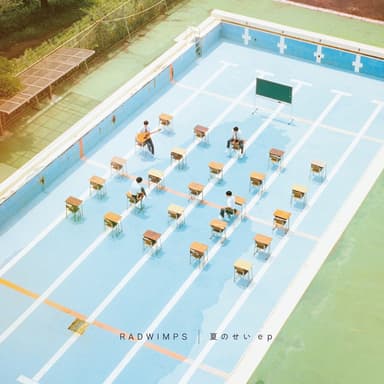
Blame Summer EP
夏のせい EP (2020) was written into a summer nobody got to have, and it shows. The title track piles up the vocabulary of being left behind by a season - 取り残す, 跡形, 果てしない - while Shinsekai turns bleak and formal (皆無, 罵声, 優劣, 生け贄) and Cocorononaca closes on the words of endurance: 容赦, 覚悟, 子孫.
Vocabulary
| Word | Meaning | Example |
|---|---|---|
| 取り残す | to leave behind (とりのこす) | 私だけ話題から取り残された。I alone was left out of the conversation. |
| 背伸び | stretching up, overreaching oneself (せのび) | 背伸びせず自分らしくいたい。I want to be myself without overreaching. |
| 助走 | a run-up (じょそう) | 助走をつけて跳んだ。He took a run-up and jumped. |
| 忙しない | restless, hurried (せわしない) | 年末は何かと忙しない。The end of the year is hectic one way or another. |
| 果てしない | endless, boundless (はてしない) | 果てしない議論に疲れた。I'm tired of the endless discussion. |
| 跡形 | a trace, a vestige (あとかた) | 建物は跡形もなく消えていた。The building had vanished without a trace. |
| 長引く | to drag on, to be prolonged (ながびく) | 会議が予定より長引いた。The meeting dragged on longer than planned. |
| 覚悟 | readiness, resolve, bracing oneself (かくご) | 厳しい結果も覚悟している。I'm braced for a harsh result too. |
| 命題 | a proposition, a thesis (めいだい) | その命題は証明されていない。That proposition has not been proved. |
| 頼り切る | to rely on completely (たよりきる) | 人に頼り切るのはよくない。It's not good to rely on others completely. |
| 真新しい | brand new (まあたらしい) | 真新しい制服に袖を通した。I put on the brand-new uniform. |
| 憧れ | longing, yearning, admiration (あこがれ) | 子供の頃からパイロットへの憧れがあった。I've had a longing to be a pilot since childhood. |
| 憐れむ | to pity, to feel compassion for (あわれむ) | 憐れむような目で見られた。They looked at me with pity. |
| 背負う | to carry on one's back, to shoulder (せおう) | 彼は一人で責任を背負っている。He is shouldering the responsibility alone. |
| 噛み締める | to chew over, to savour fully (かみしめる) | 勝利の喜びを噛み締めた。They savoured the joy of victory. |
| 皆無 | none whatsoever (かいむ) | その可能性は皆無ではない。That possibility is not nonexistent. |
| 赤の他人 | a complete stranger (あかのたにん) | 昨日まで赤の他人だった。Until yesterday we were complete strangers. |
| 凪ぐ | to grow calm (of wind or sea) (なぐ) | 夕方になって海が凪いだ。The sea grew calm towards evening. |
| 罵声 | jeering, abusive shouting (ばせい) | 観客席から罵声が飛んだ。Jeers flew from the stands. |
| 生け贄 | a sacrifice, a scapegoat (いけにえ) | 誰かを生け贄にするのは違う。Making a scapegoat of someone is wrong. |
| 優劣 | relative merit, which is better (ゆうれつ) | 二案に優劣はつけがたい。It's hard to say which of the two is better. |
| 淀む | to stagnate, to grow sluggish (よどむ) | 空気が淀んでいるので窓を開けた。The air was stagnant so I opened a window. |
| 容赦 | mercy, leniency (ようしゃ) | 審査は容赦なく行われた。The review was conducted without mercy. |
| 踏みつける | to trample, to tread on (ふみつける) | 花壇を踏みつけないで。Don't trample the flower bed. |
| 涙袋 | the soft area beneath the eye (なみだぶくろ) | 涙袋にメイクをするのが流行っている。Making up the area under the eyes is in fashion. |
| 晴天の霹靂 | a bolt from the blue (せいてんのへきれき) | その知らせは晴天の霹靂だった。The news was a bolt from the blue. |
| 子孫 | descendants (しそん) | この森を子孫に残したい。I want to leave this forest to our descendants. |
| 最前線 | the front line (さいぜんせん) | 彼は研究の最前線に立っている。He stands at the front line of the research. |
More from RADWIMPS


Study "Blame Summer EP" in the app
Import all 28 words in one tap. Lanma schedules the reviews, plays the pronunciation, and puts you on air to use them in a live voice conversation.